
From Forbidden Dance to Royal Revival: The True History of the Hula Lūʻau
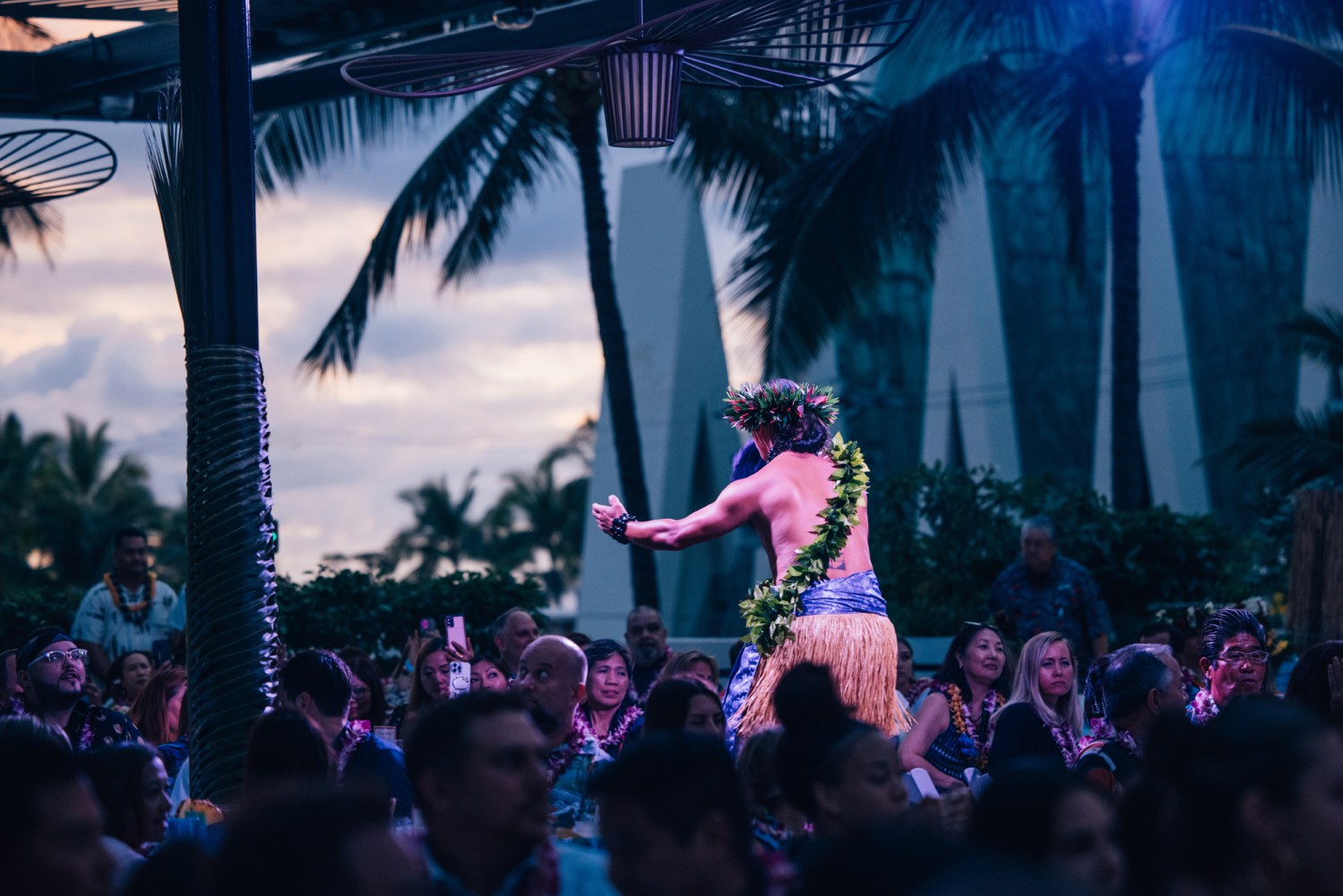
Hula Dancer performing at Paina Waikiki
The Name We Got Wrong
Here is a secret most visitors never learn: the word “lūʻau” does not mean party, celebration, or feast. It means taro leaves.
The young, tender tops of the kalo plant. The same greens wrapped around pork and steamed in the imu. Somewhere around the mid 19th century, the dish became so inseparable from Hawaiian celebrations that its name replaced what Hawaiians had called these gatherings for centuries: ʻahaʻaina.
ʻAha means “gathering.” ʻAina means “meal.” Put them together and you have something far more profound than a tourist attraction. You have a tradition that predates written Hawaiian history, one that survived suppression, reinvention, and commercialization. This is the story of how the ʻahaʻaina became the lūʻau, and how the dance called hula almost disappeared before a king brought it back to life.
ʻAhaʻaina: The Gathering Meal Before 1819
Ancient ʻahaʻaina were nothing like the casual beach parties you might imagine. These were formal ceremonies held to honor Hawaiian gods, celebrate victorious battles, or bless the launch of a new voyaging canoe. Specific foods carried symbolic weight. The preparation of the kalua pig in the underground imu represented the transformation of raw elements into nourishment through the womb of the earth.
Hula and chant did not exist to entertain. They provided context and meaning. The mele told genealogies, connected participants to their ancestors, and invoked spiritual protection. This was living history, performed rather than written.
One crucial detail shaped every ʻahaʻaina: the kapu system. Men and women ate separately. Certain foods were forbidden to women entirely. Commoners could not share the same meal with chiefs. The feast was celebration, yes, but celebration bound by rigid spiritual law.
The Breaking of Kapu and the Birth of a New Feast
Everything changed in 1819, months before the first Christian missionaries arrived.
King Kamehameha II, at the urging of his mother Keōpūolani and the powerful Queen Regent Kaʻahumanu, sat down and ate with women at a public banquet. This act, called the ʻai noa (free eating), shattered the kapu system that had governed Hawaiian society for centuries.
With the taboos removed, the ʻahaʻaina transformed. Men and women feasted together. The celebrations grew larger, more inclusive. By 1847, King Kamehameha III hosted a legendary feast with over 4,000 taro plants, 271 pigs, and 5,000 fish consumed by thousands of guests. Around 1856, Hawaiians began calling these gatherings by a new name: the lūʻau.
The Silencing: 1830 and the Hula Ban
Just as the feast opened to all, the dance that accompanied it fell under attack.
Queen Kaʻahumanu converted to Christianity in 1825. Five years later, she issued an oral proclamation: hula was forbidden. Public performance meant heavy fines, even imprisonment. The missionaries had deemed hula a “relic of barbaric sensuality,” and Kaʻahumanu agreed.
But law could not erase memory. Hula survived in private homes, in rural villages, in gatherings held quietly beyond the reach of authorities. Kumu hula (teachers) continued passing down chants and movements to trusted students. When Kaʻahumanu died in 1832, enforcement weakened, but the formal ban remained on the books for over four decades.
The heartbeat of the Hawaiian people kept beating. It just beat softer.
The Hero: King Kalākaua and the 1883 Revival
Then came David Laʻamea Kalākaua.
When he ascended to the throne in 1874, Kalākaua understood something his predecessors had not: Hawaiian identity was inseparable from Hawaiian art. Hula was not a quaint relic. It was, as he famously declared, “the language of the heart, and therefore the heartbeat of the Hawaiian people.”
On February 12, 1883, Kalākaua held his coronation at the newly completed ʻIolani Palace. He defied the missionary establishment by commissioning three days of public hula performances. A printed program listed the order of dances and the names of kumu hula. Critics called it obscene; the printers were arrested and convicted. Kalākaua did not back down.
His 50th birthday celebration in 1886, the Silver Jubilee, went even further. Chanters and dancers performed ancient and newly composed pieces on the palace grounds before hundreds of guests. The King had resurrected hula, and by doing so, he married the dance permanently to the Hawaiian feast.
This is why we call him the Merrie Monarch. This is why the premier hula competition in the world still bears his name.
A Royal Connection: From Brother to Sister
King Kalākaua was not an only child. His sister would become the last reigning monarch of the Hawaiian Kingdom: Queen Liliʻuokalani.
While Kalākaua revived hula at ʻIolani Palace, Liliʻuokalani built her legacy of hospitality at her beloved Waikīkī estate. The area was known as Hamohamo, a name that translates to “rub gently,” referring to the healing qualities of its winds and waters. There she maintained two residences: Paoakalani (“royal perfume”), her principal Waikīkī home, and Keʻalohilani (“royal brightness”), her seaside cottage near Kūhiō Beach.
The Queen was famous for welcoming visitors. In 1869, she hosted the Duke of Edinburgh with a program of traditional hula, chants, and games that had rarely been seen since the ban. A newspaper representing missionary views called the display “disgraceful heathenism.” Liliʻuokalani simply continued being herself: a gracious host, a composer of over 165 songs, and a woman who believed Hawaiian culture was worth celebrating.
Today, the grounds of Hamohamo, where the Queen once entertained royalty and commoners alike, host the Waikiki Beach Marriott Resort. And on its Queensbreak deck, Pāʻina Waikīkī continues the tradition of intimate gatherings where hula tells stories and guests are treated like ʻohana. The brother revived the dance. The sister preserved the spirit of hospitality. We honor both.
Hula Kahiko vs. Hula ʻAuana: Understanding Both Traditions
When you attend an authentic lūʻau, you witness two distinct styles of hula.
Hula kahiko is the ancient form, performed with percussion instruments like the ipu heke (double gourd drum) and pahu (sharkskin drum). A chanter delivers oli in Hawaiian. The movements are deliberate, grounded, sometimes fierce. Dancers do not smile. This is not entertainment. This is prayer, genealogy, and history made physical.
Hula ʻauana emerged in the late 19th century as Western influences reshaped Hawaiian performance. The ukulele and slack-key guitar replaced drums. Melodies became sweeter, lyrics more romantic. Dancers wear flowing dresses rather than traditional paʻu skirts. Expressions are animated, emotional, accessible.
Neither form is “better.” Kahiko connects us to Hawaiʻi before Western contact. ʻAuana shows how tradition evolved through the monarchy era and into the modern age. At Pāʻina Waikīkī, our Tihati Productions performers present both, guiding you through the full arc of Hawaiian history.
The Marriage of Dance and Feast
Kalākaua did more than bring hula back. He formalized the narrative structure that defines the modern lūʻau experience.
Every evening at Pāʻina Waikīkī follows a journey. We begin with hula kahiko, connecting guests to a Hawaiʻi before missionaries and commerce. We move through the monarchy era with elegant ʻauana performances that honor the songs of Liliʻuokalani and her contemporaries. We visit other Polynesian cultures through dances of Tahiti, New Zealand, and Samoa. And we close with Siva Afi, the Samoan fire knife dance, a finale of raw physical courage that reminds us Polynesian cultures also celebrated warriors.
This is not a random collection of performances. It is a story, told the way Kalākaua intended: with reverence, with joy, and with the conviction that Hawaiian culture deserves to be perpetuated, not preserved behind glass.
What You Witness Tonight
So the next time someone asks you what a lūʻau is, you can tell them the secret.
It is not a party named after itself. It is an ʻahaʻaina, a gathering meal, renamed for the taro leaf dish that became its centerpiece. It is a celebration that almost lost its soul when hula was banned, then found it again when a king refused to let his people forget. And here on the grounds of Hamohamo, where Queen Liliʻuokalani once welcomed the world into her home, it is a pāʻina, an intimate dinner party where you are not a spectator but a guest.
We are honored to continue this story. Mahalo for becoming part of it.
FAQs
Is “hula lūʻau” the correct term?
Technically, hula is the dance and lūʻau is the feast. They became intertwined during King Kalākaua’s revival in the 1880s, so the phrase “hula lūʻau” refers to a celebration that includes both. Before that era, ʻahaʻaina gatherings featured hula and chant, but the combination was ceremonial rather than entertainment-focused.
Why did missionaries want to ban hula?
Protestant missionaries arriving in the 1820s viewed hula as a pagan ritual connected to the old Hawaiian religious system. They considered the movements immodest and the chants references to gods they wanted Hawaiians to abandon. Queen Kaʻahumanu, after converting to Christianity, issued the 1830 ban. Importantly, the missionaries themselves could not create law. They influenced the aliʻi (royalty), who held legislative power.
What makes Pāʻina Waikīkī different from other Oʻahu lūʻau?
Most lūʻau process hundreds of guests nightly at remote locations. Pāʻina Waikīkī is an intimate gathering on the historic grounds of Queen Liliʻuokalani’s Waikīkī estate. Our show, produced by Tihati Productions, follows the narrative arc Kalākaua pioneered: from ancient kahiko through the monarchy era to a Siva Afi finale. You are close enough to see expressions on dancers’ faces and feel the heat from the flames. This is a dinner party, not a stadium show.
Experience the history of hula and lūʻau where it was meant to be celebrated. Book your seat at Pāʻina Waikīkī today.